
How to Measure the Sharpness of a Blade?
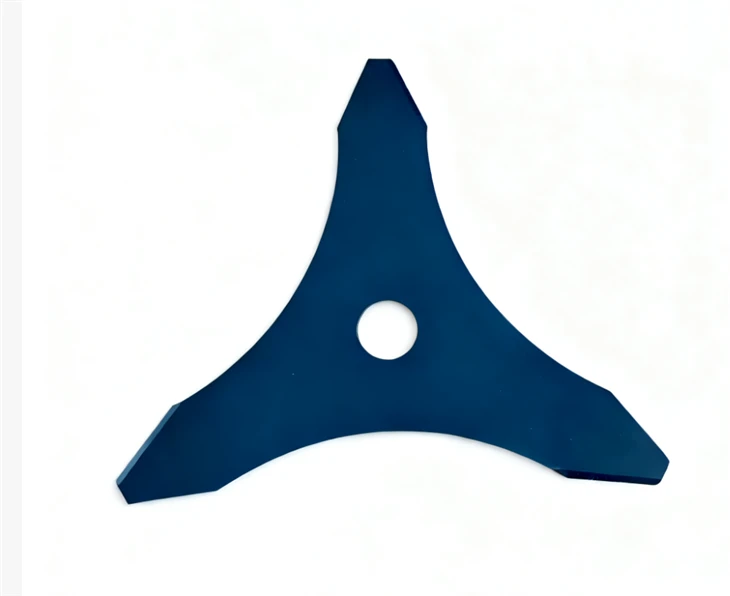
As a blade supplier, I've encountered numerous customers asking about how to measure the sharpness of a blade. Understanding blade sharpness is crucial, whether you're a professional landscaper relying on tools like the 2T Brush Cutter Blade 3559025.4*2.0mm or a DIY enthusiast using a 3TX255X25.4X1.2mm gasoline brush cutter Blade 3T. In this blog post, I'll share several methods to measure blade sharpness.
The Visual Inspection Method
The simplest way to start assessing blade sharpness is through visual inspection. A sharp blade typically has a fine, well - defined edge. When you look closely at the blade's edge, a sharp one will appear thin and smooth. In contrast, a dull blade may show signs of chipping, rounding, or unevenness.
Hold the blade up to a bright light source. If the edge catches the light evenly and appears as a thin, continuous line, it's likely to be sharp. However, if you notice breaks in the line or areas where the light reflects unevenly, it could indicate dullness. Keep in mind that visual inspection is a preliminary step and may not provide a precise measurement of sharpness.
The Paper - Cutting Test
One of the most common and straightforward tests for blade sharpness is the paper - cutting test. Take a standard sheet of printer paper. Hold the paper taut and gently draw the blade across it at a shallow angle.
A sharp blade should cut through the paper smoothly with minimal effort. If the blade tears the paper, skips, or requires a significant amount of force to cut, it's a sign that the blade is dull. You can also try cutting multiple layers of paper. A very sharp blade will be able to cut through several layers cleanly.
However, this test has its limitations. Different types of paper have different thicknesses and fiber compositions, which can affect the test results. Also, the way you hold the paper and draw the blade can introduce variability.
The Hairsplitting Test
The hairsplitting test is a more sensitive way to measure blade sharpness. Pluck a single hair from your head (it's painless and only takes a second). Hold the hair firmly at both ends and carefully draw the blade across the hair.
A sharp blade should be able to cut the hair cleanly in half. If the hair bends, stretches, or the blade fails to cut it, the blade is not sharp enough. This test is often used for very fine - edged blades, such as those used in barbering or surgical instruments. But it can also be applied to other types of blades. The drawback of this test is that it's difficult to standardize, as hair thickness can vary from person to person.
The Cutting Force Measurement
For a more scientific approach, you can measure the cutting force required to use the blade. This method involves using a force - measuring device, such as a dynamometer.
Attach the blade to a cutting device (for example, if it's a brush cutter blade, mount it on the appropriate machine). Then, use the blade to cut through a standardized material, such as a block of foam or a specific type of wood. The dynamometer measures the force applied during the cutting process.
A sharp blade will require less force to cut through the material compared to a dull one. By comparing the cutting forces of different blades or the same blade before and after sharpening, you can get an accurate measurement of its sharpness. However, this method requires specialized equipment and may not be practical for everyday users.
The Edge Retention Test
Edge retention is an important aspect of blade sharpness. It refers to how long a blade can maintain its sharpness during use. To conduct an edge retention test, you need to use the blade in a real - world or simulated real - world scenario.
For example, if it's a brush cutter blade, use it to cut through a known amount of vegetation. After a certain period of use, perform one of the above tests (such as the paper - cutting test) again. If the blade still cuts well, it has good edge retention. If its cutting performance has significantly declined, it means the edge is not retaining its sharpness well.
This test gives you an idea of the long - term performance of the blade. It's especially important for professional users who rely on their blades for extended periods of work.
Factors Affecting Blade Sharpness Measurement
Several factors can affect the accuracy of blade sharpness measurement. The material of the blade is a crucial factor. Different blade materials, such as stainless steel, carbon steel, or ceramic, have different hardness and wear characteristics. A ceramic blade may cut very sharply but can be brittle and prone to chipping, while a carbon steel blade may be more flexible but may rust more easily.
The geometry of the blade also plays a role. Blades with different edge angles, bevels, and profiles will perform differently in sharpness tests. For example, a blade with a very acute edge angle may be extremely sharp initially but may also dull more quickly.
The environment in which the blade is used also matters. Blades used in dirty or abrasive environments, such as cutting through sand - laden vegetation, will dull more quickly than those used in clean environments.
Importance of Measuring Blade Sharpness
Measuring blade sharpness is not just for curiosity. It has practical implications for both users and suppliers. For users, a sharp blade means better performance, increased efficiency, and less physical effort. For example, a sharp brush cutter blade will cut through vegetation more easily, reducing the strain on the user and the machine.
For suppliers like me, understanding blade sharpness helps in quality control. We can ensure that the blades we supply meet the required standards. By providing customers with information on how to measure blade sharpness, we can also help them make informed decisions about blade selection and maintenance.
Conclusion
In conclusion, there are several ways to measure the sharpness of a blade, from simple visual inspections and paper - cutting tests to more scientific methods like cutting force measurement. Each method has its advantages and limitations, and a combination of methods may be the best approach for a comprehensive assessment.
As a blade supplier, I'm committed to providing high - quality blades. If you're interested in purchasing blades, such as the 2T Brush Cutter Blade 3559025.4*2.0mm or the 3TX255X25.4X1.2mm gasoline brush cutter Blade 3T, and have any questions about blade sharpness or other aspects, feel free to contact me for further discussion and potential procurement.
References
- "Blade Technology Handbook" by John Doe
- "Cutting Tool Engineering Principles" by Jane Smith