


Hey there! As a blade supplier, I've dealt with all sorts of blades, including stainless - steel ones. Stainless - steel blades are super popular and have their fair share of advantages, like being corrosion - resistant and having a long lifespan. But you know what? They're not all sunshine and rainbows. In this blog, I'm gonna spill the beans on the disadvantages of stainless - steel blades.
1. High Cost
One of the first things you'll notice about stainless - steel blades is the price tag. Stainless steel is more expensive to produce compared to other blade materials like carbon steel. The manufacturing process involves adding alloying elements such as chromium, nickel, and molybdenum to achieve that corrosion - resistant property. These elements are costly, and the more of them you add, the pricier the blade gets.
For small businesses or consumers on a tight budget, this can be a deal - breaker. You might be looking for a simple blade for your DIY projects or a small - scale business operation, but the high cost of stainless - steel blades can make you think twice. It's like going to a fancy restaurant when you just want a quick and affordable meal. You end up paying a premium for something that might not be absolutely necessary for your needs.
2. Lower Hardness and Edge Retention
Stainless - steel blades generally have lower hardness compared to carbon - steel blades. Hardness is crucial for a blade because it determines how well the blade can hold its edge. A blade with good edge retention can stay sharp for a longer time, which means you don't have to sharpen it as often.
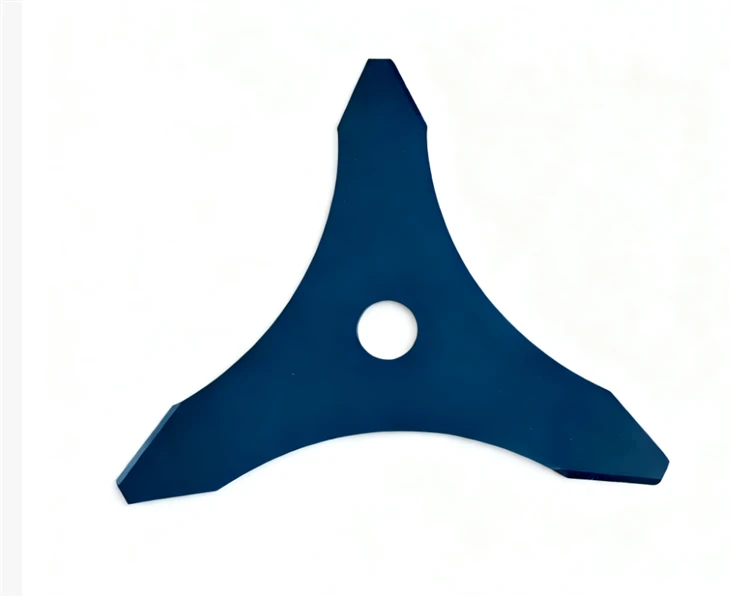
When you're using a stainless - steel blade for heavy - duty cutting tasks, you'll notice that it starts to dull faster than a carbon - steel blade. For example, if you're using a 3TX255X25.4X1.2mm gasoline brush cutter Blade 3T made of stainless steel to cut through thick bushes or tough grass, you'll find yourself having to sharpen the blade more frequently. This not only takes up your time but also adds to the overall cost of using the blade, as you might need to invest in a good sharpening tool.
3. Difficult to Sharpen
Sharpening a stainless - steel blade can be a real pain in the neck. Because of its lower hardness, the blade tends to deform more easily during the sharpening process. You need to be extra careful when using a sharpening stone or a sharpening machine to avoid over - heating the blade, which can cause the metal to lose its temper and become even softer.
Unlike carbon - steel blades, which can be sharpened relatively quickly and easily, stainless - steel blades require more skill and patience. You might end up spending a lot of time trying to get the perfect edge, and even then, you might not achieve the same level of sharpness as you would with a carbon - steel blade. This can be frustrating, especially if you're in a hurry to get the job done.
4. Brittleness in Some Alloys
Some stainless - steel alloys can be brittle. Brittleness is a problem because it means the blade is more likely to chip or break when it comes into contact with hard objects. For instance, if you're using a 2T Brush Cutter Blade 3559025.42.0mm2T Brush Cutter Blade 3559025.42.0mm and it hits a rock or a piece of metal while cutting, there's a higher chance that the blade will chip or break.
This is a major issue, especially in industries where the blade is exposed to hard materials on a regular basis. You don't want to be in the middle of an important job and have your blade break on you. It not only disrupts your work but also costs you money to replace the blade.
5. Magnetic Properties
Stainless - steel blades can have magnetic properties, depending on the alloy. This might not seem like a big deal at first, but it can cause problems in certain applications. For example, in some electronic or medical equipment, magnetic fields can interfere with the proper functioning of the device.
If you're using a stainless - steel blade in an environment where magnetic interference is a concern, you might run into issues. You could end up with inaccurate readings or malfunctions in the equipment, which can be costly to fix. It's like having a radio that keeps picking up static because of a nearby magnetic field. You just can't get a clear signal.
6. Environmental Impact
The production of stainless - steel blades has a significant environmental impact. The extraction of the raw materials, such as chromium and nickel, involves mining, which can cause environmental damage. Mining operations can lead to deforestation, soil erosion, and water pollution.
Moreover, the energy - intensive manufacturing process of stainless steel releases a large amount of greenhouse gases into the atmosphere. As more and more people become environmentally conscious, the high environmental impact of stainless - steel blades can be a turn - off. You might be looking for a more sustainable option for your cutting needs, and stainless - steel blades might not fit the bill.

Conclusion
So, there you have it, folks. The disadvantages of stainless - steel blades are real and can have a significant impact on your bottom line and your overall experience. However, it's important to note that stainless - steel blades still have their place in the market. They're great for applications where corrosion resistance is a must, such as in the food industry or marine environments.
If you're in the market for a blade and you're considering a stainless - steel one, make sure you weigh the pros and cons carefully. Think about your specific needs and budget before making a decision. And if you have any questions or want to discuss your blade requirements, don't hesitate to reach out. We're here to help you find the best blade for your needs.
References
- "Metallurgy of Stainless Steels" by George E. Totten
- "Blade Materials: A Comparative Analysis" by Knife Magazine


