
Hey there! As a hand tool supplier, I've been dealing with all sorts of tools for ages. One question that often pops up is, "What's the difference between a hand file and a power file?" Well, let's dive right in and break it down.
Basics of Hand Files
First off, hand files are the old - school way of getting the job done. They're simple, reliable, and have been around for centuries. A hand file is a small, handheld tool with a rough surface made up of tiny teeth. These teeth are what do the cutting and shaping work.
The great thing about hand files is their simplicity. You don't need any power source, whether it's electricity or batteries. All you need is your own muscle power. This makes them super portable. You can carry a hand file in your pocket or a small toolbox and take it anywhere. Whether you're working in your backyard workshop or out in the field, a hand file is always there when you need it.
There are different types of hand files too. For example, there are flat files, which are great for smoothing flat surfaces. Round files are used for filing holes or curved surfaces. And then there are half - round files, which combine the features of flat and round files. You can also find triangular files for filing corners and V - shaped grooves.
Let's say you're working on a wooden project. You've just cut a piece of wood, and the edges are rough. A hand file can come in handy to smooth those edges out. You just hold the file firmly and move it back and forth over the surface. It takes a bit of time and effort, but the result is a nice, smooth finish.
The Lowdown on Power Files
On the other hand, power files are a more modern option. These tools are powered by electricity or compressed air. They use a motor to spin or vibrate a file bit at high speeds. This means they can remove material much faster than a hand file.
Power files are great for large - scale projects or when you need to remove a lot of material quickly. For instance, if you're working on a metal fabrication project and you need to shape a thick piece of metal, a power file can make the job a whole lot easier. You don't have to put in as much physical effort as you would with a hand file.
There are also different types of power files. Some are designed for light - duty work, like deburring small metal parts. Others are more heavy - duty and can handle tough materials like stainless steel. Power files often come with different attachments, so you can change the file bit depending on the job you're doing.
However, power files do have some drawbacks. They're not as portable as hand files. You need to be near a power source, whether it's an electrical outlet or an air compressor. And they can be a bit noisy, which might be a problem if you're working in a quiet environment.
Comparing the Two
Now, let's compare hand files and power files side by side.
Speed
As I mentioned earlier, power files are much faster at removing material. If you have a tight deadline and need to get a lot of work done quickly, a power file is the way to go. But if you're in no rush and you're working on a small, delicate project, a hand file might be better. You have more control over the amount of material you're removing, and you're less likely to make mistakes.
Precision
When it comes to precision, hand files have the edge. Since you're using your own hands to guide the file, you can make very fine adjustments. This is especially important when you're working on detailed work, like jewelry making or model building. Power files, on the other hand, can be a bit more difficult to control precisely, especially at high speeds.
Cost
Hand files are generally much cheaper than power files. You can buy a basic hand file for just a few dollars. Power files, on the other hand, can cost anywhere from a few dozen to a few hundred dollars, depending on the brand and features. If you're on a tight budget, a hand file might be the more affordable option.
Durability
Both hand files and power files can be durable if they're well - made. Hand files are simple tools with no moving parts, so there's not much that can go wrong with them. As long as you take care of them and keep them clean, they can last for a long time. Power files, however, have motors and other components that can wear out over time. They also require more maintenance, like oiling and replacing parts.
When to Use Each
So, when should you use a hand file and when should you use a power file?
If you're doing small, detailed work, like filing the edges of a small metal part or shaping a wooden dowel, a hand file is the best choice. You have more control, and you can achieve a high level of precision.
For large - scale projects, like removing a lot of material from a thick piece of metal or shaping a large wooden plank, a power file is more efficient. You'll save a lot of time and energy.
Our Product Offerings
As a hand tool supplier, I offer a wide range of both hand files and power files. We have high - quality hand files in all shapes and sizes, from flat files to triangular files. And our power files come from top - notch brands, with different power options and attachments.
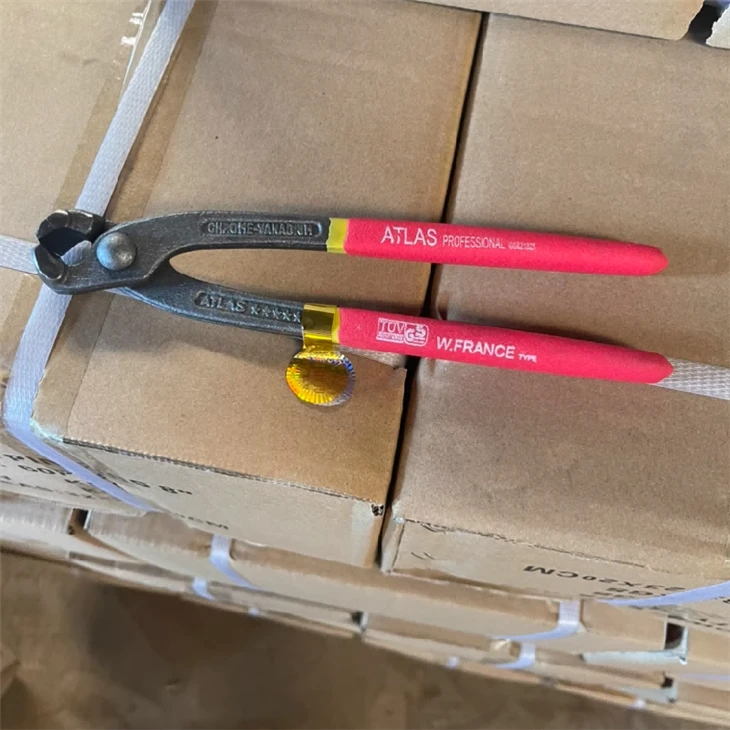
If you're interested in our products, you might also want to check out our 8 ”Rabbet pliers or 8inch Rabbet Pliers. These are great tools for various tasks, and they're built to last.
Conclusion
In conclusion, both hand files and power files have their own strengths and weaknesses. The choice between the two depends on the type of project you're working on, your budget, and your personal preferences. Whether you're a professional tradesperson or a DIY enthusiast, having both a hand file and a power file in your toolbox can be very useful.
If you're interested in purchasing hand files, power files, or any of our other hand tools, don't hesitate to get in touch. We're always happy to help you find the right tool for the job.
References
- "Hand Tools: A Comprehensive Guide" by John Smith
- "Power Tools for Beginners" by Jane Doe